
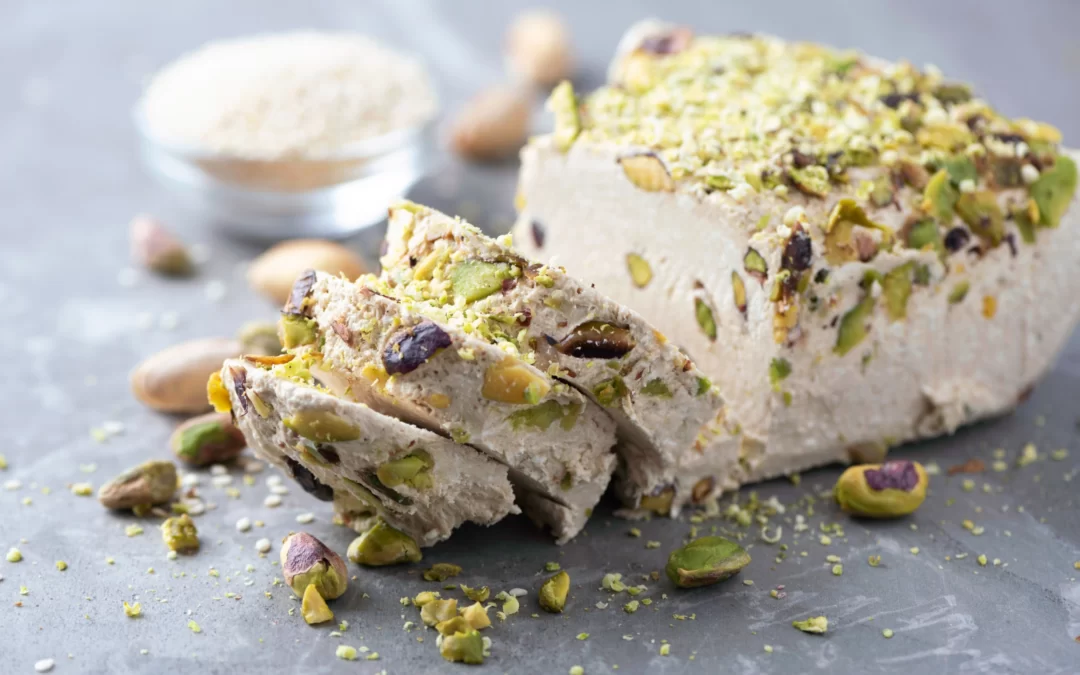
Benefits of halva without fear of calories
Nutritional value of halva
We review the following nutritional ingredients for halva:
First: Minerals
Halawa is a source of manydistinctive minerals, and among the minerals that halva is rich in:
- Iron.
- Phosphorus.
- Copper.
- Magnesium.
- Zinc
- Manganese.
- Calcium.
- Sodium.
- Selenium.
- Potassium.
Every 100gm of halva covers more than 80% of the body’s daily need for phosphorous.
Second: Vitamins
Halva contains a large number of vitamins, and the most famous vitamins are:
- Vitamin B1.
- Vitamin B6.
- Vitamin B3.
- Vitamin C.
- Vitamin B12.
- Vitamin B2.
Each 100 gm of halva contains the equivalent of 65 micrograms of folic acid.
Third: Protein and fats
Every 100 grams of halva contains about 12 grams of protein. Among the most popular amino acids in halva are the following:
- Phenylalanine.
- lysine.
- tryptophan.
- Valene.
Halva is one of the foods high in fat, as every 100 grams of it contains 21 grams of fat. (4)
Halva, how many calories
Halva is considered one of the foods rich in carbohydrates, as each 100 grams of it contains about 60 grams of carbohydrates, and specialists recommend eating about 30 grams per day of halva, so the individual gets contains about 17g of carbohydrates.
We find in every 100 grams of halva the equivalent of 470 calories, the largest share of which is carbohydrates, and therefore halva is classified within the list of high-calorie foods. (4)
Benefits of halva
As we mentioned, halva contains a large amount of useful vitamins, and it contains many useful substances for the body, such as minerals, oils, and raw seeds. Specialists and doctors advise eating halva at all times of the year, and throughout the day as well, without extravagance.
We review the followingthe most important benefits of halva:
- Oils: especially Sesame oil rich in beneficial fatty acids for the skin.
- <str